
GSE Maintenance Management: A Complete Guide for Aviation Ground Operations


What Is GSE Maintenance?
GSE maintenance refers to the servicing, inspection and repair of equipment used to support aircraft on the ground. This includes all assets involved in loading, unloading, powering and preparing aircraft during turnaround.
Aircraft ground support equipment maintenance covers a wide range of equipment, including:
- Aircraft tugs and tow tractors
- Belt loaders
- Ground power units (GPUs)
- Passenger stairs
- Baggage carts and dollies
- Lavatory and water service units
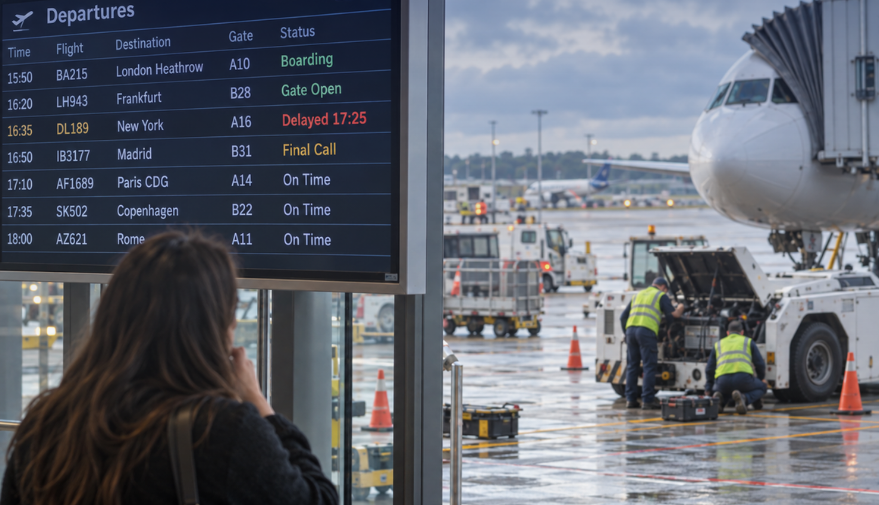
Unlike traditional maintenance environments, GSE maintenance is rarely centralised. Equipment is constantly moving across the airport, often shared between teams and used under tight time constraints.
Why GSE Maintenance Is More Complex Than It Appears
At first glance, ground support equipment maintenance may seem similar to other asset maintenance environments. In reality, airports introduce a unique combination of operational pressures.
GSE maintenance teams must manage:
- Equipment spread across multiple terminals and stands
- High dependency on aircraft turnaround schedules
- Continuous 24/7 operations
- Strict safety and compliance requirements
- Multiple stakeholders, including airlines and airport operators
Because of this, even small inefficiencies in maintenance processes can quickly escalate into operational disruption.
Where GSE Maintenance Operations Commonly Struggle
Most downtime in airport GSE environments is not caused by a lack of technical capability. Instead, it tends to stem from gaps in visibility, process and communication.
Some of the most common pressure points include:
Asset Visibility
When equipment is constantly moving between terminals and service areas, it becomes difficult to track availability and condition. This often leads to delays, duplicated effort and unnecessary asset movement.
Fault Reporting
In many operations, faults are still reported informally. This can create delays in job creation and make it harder to build a reliable maintenance history for each asset.
Work Order Management
High job volumes and multiple teams can make it difficult to maintain consistent work order processes. Without structure, jobs may be missed, duplicated or poorly documented.
Preventative Maintenance
Inspection schedules are often impacted by operational demand. When preventative maintenance slips, failures are more likely to occur during live aircraft operations.
Performance Visibility
Many GSE teams are expected to meet response times and availability targets, but lack clear visibility into performance data. This makes it harder to identify trends or improve decision-making.
What Effective GSE Maintenance Management Looks Like
While every airport operates differently, the most effective GSE maintenance environments tend to share a number of common characteristics.
They focus on:
- Maintaining clear visibility of asset status and location
- Ensuring faults are consistently captured and tracked
- Creating structure around work orders and job ownership
- Supporting preventative maintenance despite operational pressure
- Improving visibility of performance and downtime trends
These areas form the foundation of a more controlled and predictable maintenance operation.
Why Many GSE Operations Remain Reactive
Despite best intentions, many GSE maintenance teams find themselves operating reactively.
This is often due to:
- Reliance on manual or informal processes
- Lack of real-time visibility across terminals
- Difficulty aligning maintenance with operational demand
- Limited access to consistent data
As a result, teams spend more time responding to breakdowns than preventing them.
Moving Towards More Controlled GSE Operations
Improving ground support equipment maintenance is not about implementing a single solution. It is about gradually increasing control, consistency and visibility across the operation.
For most teams, this means:
- Reducing reliance on informal communication
- Improving how faults and jobs are recorded
- Creating clearer oversight of assets and activity
- Strengthening coordination between teams and shifts
These changes help move operations from reactive to more structured and predictable.
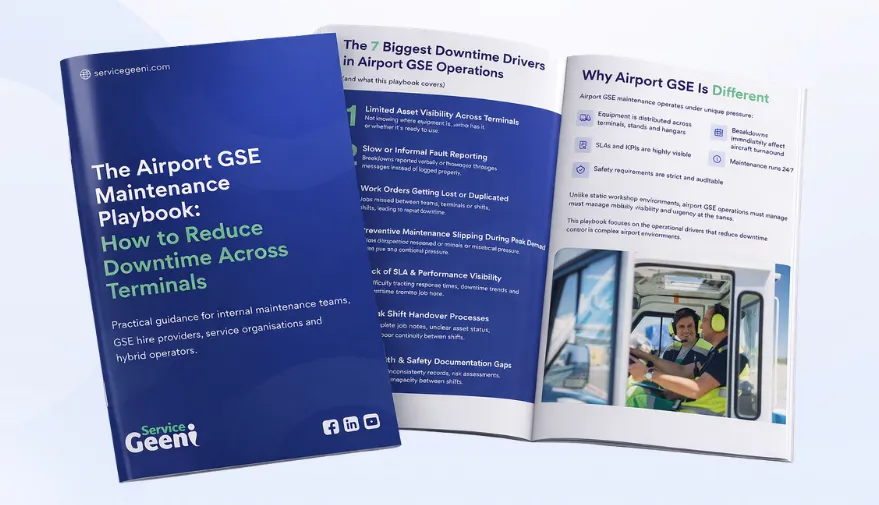
Download the Airport GSE Maintenance Playbook
If you’re looking to go deeper into the operational side of GSE maintenance, including practical ways to reduce downtime, our dedicated playbook explores this in detail. Determine where your maintenance operation sits today, and get practical steps on how to improve for the future.
The Airport GSE Maintenance Playbook: How to Reduce Downtime Across Terminals covers:
- The 7 most common causes of downtime in airport GSE operations
- How leading teams improve visibility and control
- Practical approaches to fault reporting, inspections and handover
- A maturity model to assess your current operation
Download Full PDF
Read More…
.png)
.webp)

Book Your Demo Today