
How a Customer Portal Reduces Admin for Field Service Teams


Problem 1: Too Many Emails, Calls, and “Quick Chasers”
“How’s my job looking?”
“Has the engineer been booked yet?”
“Can you resend the job sheet?”
Most customers aren’t trying to be difficult - they just don’t have visibility. If they can’t see whether a job has been booked, assigned, or completed, they’ll naturally call or email for reassurance.
Over time, these “quick chaser” messages become a daily distraction for your service desk. Even if each one only takes a minute or two to answer, they add up fast and pull your team away from more important work like scheduling engineers, resolving escalations, and managing workloads.
The Fix: Live Job Visibility for Customers
A customer portal gives your customers real-time visibility into their service jobs - from logging the call to completion.
With live status updates, appointment visibility, and automated notifications, customers can:
- Track progress without contacting your office
- See engineer attendance and booking slots
- Access full job histories anytime
The result? Fewer interruptions, fewer emails, and a calmer service desk.
Problem 2: Manual Job Logging Slows Everything Down
“We’ve got a fault - can someone come out?”
“We’ve got a breakdown on site.”
“Same issue as last time.”
When customers raise jobs through emails and phone calls, the details are often inconsistent or incomplete. Missing asset references, unclear descriptions, and no supporting photos means your team has to go back and forth before the job can even be triaged properly.
That delay at the start of the process impacts everything in your service operations - slower response times, less efficient engineer scheduling, and a higher risk of sending the wrong person or the wrong parts. The more job volume you handle, the more this manual process becomes a bottleneck.
The Fix: Self-Service Job Logging
A customer portal allows customers to log jobs themselves, properly, and instantly.
They can:
- Raise service calls directly into your live system
- Categorise issues for faster routing
- Attach photos, documents, and detailed notes
This means better-quality job data from the start, and faster responses from your team.
Problem 3: Document Chaos and Approval Delays
“Can you resend the job sheet?”
“Do you have the signed report?”
“We need the certificate for compliance.”
Documents are essential in field service, but they’re also one of the biggest admin drains. Customers often need quick access to job sheets, service reports, invoices, and compliance documentation - and if they can’t get them easily, they’ll chase your team for them.
This creates unnecessary delays, especially when customers need paperwork to approve jobs internally or sign off payments. It can also lead to disputes when the right documents aren’t available at the right time, or when different teams are working from different versions.
The Fix: Centralised Document Access
With a customer portal, all service documents live in one place.
Customers can:
- Download signed job sheets and service reports
- View invoices, payment status, and contracts
- Access compliance certificates and PPM schedules
This removes paperwork bottlenecks, speeds sign-off, and keeps everyone working from the same version of the truth.
Problem 4: Customers Have No Visibility of Performance
“How many breakdowns have we had this month?”
“What’s still outstanding?”
“Can you send us a KPI report before the review meeting?”
Customers want more than reactive repairs - they want visibility. But when they don’t have access to service performance data, they rely on your team to pull updates, reports, and summaries manually.
This creates extra admin and often results in last-minute reporting requests. It can also damage trust over time, because even if your team is performing well, customers may feel like they’re not getting the full picture if they can’t easily see service progress, outstanding work, or trends across their assets.
The Fix: Self-Service Dashboards & KPIs
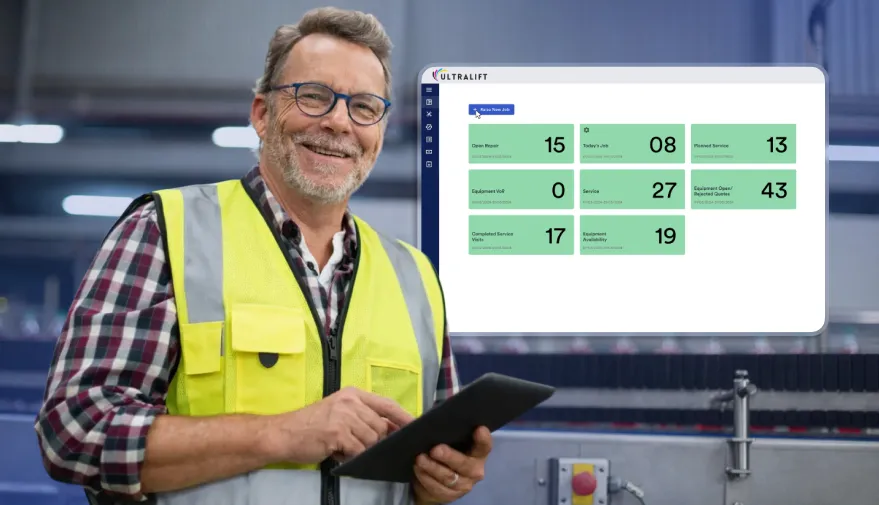
A customer portal gives customers 24/7 access to live performance dashboards, without relying on your team.
They can:
- Monitor open breakdowns and today’s jobs
- Track services due and asset availability
- View spend summaries and customer-specific KPIs
This empowers better decision-making and dramatically reduces reporting requests to your service and finance teams.
Problem 5: Slow Invoicing and Payment Cycles
“Can you confirm what this invoice relates to?”
“We’re waiting on paperwork before we can approve it.”
“Can you resend the invoice to the right contact?”
Invoicing is one of the most common friction points in field service. If invoices are delayed or unclear, payment slows down - and your finance team ends up dealing with avoidable queries and chasing approvals.
When customers can’t quickly match invoices to job sheets, service reports, or PO references, they’re far more likely to dispute or delay them. Over time, this impacts cash flow and adds another layer of admin that grows as your service operation scales.
The Fix: Automated Invoicing and Financial Visibility
With email invoicing as standard and invoice access inside the portal, billing becomes faster and clearer.
Customers always know:
- What they’ve been billed
- What’s outstanding
- What’s already been paid
That transparency shortens payment cycles and reduces finance-related queries.
Why a Customer Portal Benefits Your FSM Business
A customer portal isn’t just a “nice-to-have” feature - it’s a strategic advantage.
For field service management companies, it means:
- Less admin and fewer interruptions
Reduce the volume of incoming calls, emails, and status-chasing by giving customers instant access to the information they need. - Faster job turnaround
Customers can raise service requests with full details, photos, and supporting documents - helping your team triage faster and send the right engineer first time. - Improved communication and transparency
Live job updates and automated notifications keep customers informed throughout the service lifecycle, reducing frustration and improving the overall experience. - Happier, more self-sufficient customers
When customers can log jobs, check progress, and access documentation without waiting on your office team, service feels smoother and more professional. - Stronger long-term customer relationships
Providing visibility builds trust. Customers feel confident that jobs are being handled properly, which supports renewals and long-term contracts. - Fewer disputes and faster approvals
Easy access to signed job sheets, service reports, and invoices reduces queries, speeds up internal approvals, and improves payment cycles. - A more scalable service operation
As job volumes increase, your admin workload doesn’t need to increase at the same rate - the portal helps your team grow without becoming overwhelmed.
And because everything connects directly to your live system, your data stays accurate, up to date, and aligned across customers, engineers, and office teams.
One Platform, One Shared View of Service
Service Geeni’s customer portal is built specifically for asset-centric field service businesses that need clarity, control, and scalability - not generic tools bolted together.
By putting customers, engineers, and office teams on the same page, you reduce friction, improve service delivery, and create a smoother experience for everyone involved.
If your FSM business is looking to reduce admin, improve transparency, and give customers the control they now expect - a customer portal is no longer optional. It’s essential. Book a free demo today to explore the benefits for your business.
Download Full PDF
Read More…




Book Your Demo Today