
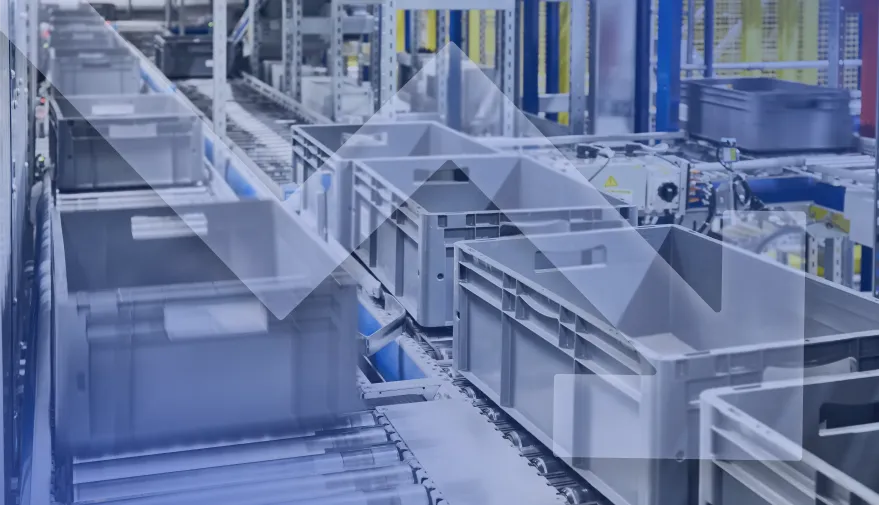
How to Reduce Downtime in Warehouses with CMMS Software


What causes warehouse downtime?
Before you can reduce warehouse downtime, you need to understand what typically drives it. In highly automated warehouse environments, downtime is often the result of operational gaps rather than catastrophic system failure.
Common causes include:
- Missed or inconsistent preventive maintenance
- Limited visibility of asset condition and history
- Recurring faults in high-usage zones
- Delayed reporting between operators and engineers
- Disconnected spreadsheets or siloed systems
- Poor tracking of parts and recurring component failures
Individually, these issues may seem manageable. Together, they create reactive maintenance cycles, longer resolution times and unnecessary operational risk.
In our latest webinar, How to Protect Your Warehouse Automation Investment, independent consultant Ebb Kretschmer highlighted that many organisations treat maintenance purely as an operational cost because the consequences of neglect are delayed. Systems may continue running for a period, which creates a false sense of security. Over time, however, performance degrades, failures become more frequent and the true cost of under-maintenance becomes significantly higher.
A structured CMMS (Computerised Maintenance Management System) reduces these gaps by centralising asset data, automating workflows and making system performance visible in real time.
1. Strengthen preventive maintenance to reduce warehouse downtime
If you want to reduce warehouse downtime, preventive maintenance is the single most important control. Reactive repairs will always be more disruptive, more expensive and more likely to impact throughput.
A CMMS allows you to formalise your preventive maintenance strategy across conveyors, robotics and automation systems. Instead of relying on manual schedules or ad hoc reminders, you create a structured and measurable approach.
That includes:
- Maintenance intervals based on runtime, cycles or manufacturer guidance
- Automatic service reminders and job scheduling
- Digital allocation of tasks to engineers or contractors
- Real-time tracking of job completion
- Full compliance history for each automation asset
Ebb also made a powerful point about delayed maintenance during the webinar:
“You don’t save any time by delaying maintenance. You borrow it - and the interest rate you pay on that borrowed time is brutal.”
In automated environments, the cost of that delay shows up later as unplanned downtime, reduced throughput and higher reactive spend.
By keeping assets at the centre of every workflow, Service Geeni ensures maintenance is consistent and accountable. Over time, this reduces emergency stoppages and protects overall warehouse performance.
For automated facilities, structured preventive maintenance is one of the most effective ways to reduce downtime in warehouses long term.
2. Improve asset visibility with advanced asset management
Warehouse automation systems are interconnected. A small component failure in one zone can disrupt multiple processes. Without a complete view of asset history and performance, identifying patterns becomes difficult.
Advanced asset management gives you a consolidated digital record for every critical component, including conveyors, motors, sensors, robotic units and control systems.
This typically includes:
- Full service and repair history
- Breakdown frequency by asset or location
- Parts replaced and associated costs
- Inspection and safety records
- Warranty and supplier tracking
When this information sits in one unified platform, you can quickly identify recurring issues and high-risk assets. That allows you to intervene early rather than repeatedly reacting to the same failure.
Service Geeni’s asset-centric approach helps you manage equipment lifecycle performance strategically, which is essential if your goal is to reduce warehouse downtime rather than simply respond to it.
3. Use real-time reporting to identify downtime trends early
Many warehouses collect maintenance data. Fewer use it proactively to prevent disruption.
Clear reporting transforms daily service activity into actionable insight. Instead of waiting for a major stoppage, you can see patterns developing across assets or zones.
With CMMS software, you can monitor:
- Downtime by asset, system or warehouse area
- Mean time between failures
- Response and resolution times
- Recurring component issues
- Preventive maintenance compliance rates
If one conveyor line shows increasing intervention frequency, you can investigate before it fails completely. If response times are creeping up, you can adjust resourcing. If certain parts fail repeatedly, you can review usage or supplier quality.
As also discussed in the webinar, “Automation needs consistency. Automation rewards consistency. If you aren’t consistent in how you maintain it, it will punish you.” Reporting and visibility are what enforce that consistency, ensuring processes are followed and standards are maintained across your automation estate.
Service Geeni turns operational data into accessible dashboards and reports that support informed decision-making. That visibility plays a crucial role in reducing unplanned downtime across automated environments.
4. Connect engineers, contractors and systems in one platform
Warehouse downtime often increases when information is fragmented. If internal engineers, automation providers and operations managers rely on separate systems, delays and miscommunication are almost inevitable.
A unified service platform brings engineers, contractors, workflows and asset data together in one place. Engineers can access complete asset histories on site, log work instantly and record parts used without switching between tools. Managers gain live visibility of job progress and system performance.
This connected approach reduces:
- Repeat visits caused by missing information
- Delays linked to manual administration
- Gaps between internal teams and external service providers
- Incomplete or inconsistent service records
Service Geeni bridges the gap between overly complex enterprise systems and lightweight tools, giving warehouse teams operational control without unnecessary complexity. When everyone works from the same source of truth, downtime becomes faster to diagnose and easier to prevent.
5. Make data-driven investment decisions across your automation estate
To sustainably reduce warehouse downtime, you need to look beyond day-to-day fixes and examine long-term asset performance.
Warehouse automation represents significant capital investment. Without consolidated asset data, it is difficult to assess total cost of ownership or identify systems that are becoming increasingly unreliable.
By analysing service and performance data, you can:
- Identify high-cost, high-risk automation assets
- Prioritise upgrades in critical areas
- Justify capital expenditure with evidence
- Reduce recurring reactive maintenance spend
Instead of responding to isolated breakdowns, you manage your automation strategy with clear performance insight. Over time, this strategic visibility significantly reduces avoidable downtime and protects operational efficiency.
What is the best way to reduce downtime in warehouses?
The most effective way to reduce downtime in warehouses is to combine:
- Structured preventive maintenance
- Centralised asset management
- Real-time service reporting
- Connected engineer and contractor workflows
- A single, unified service management platform
When these elements work together, maintenance becomes predictable and measurable. Breakdowns decrease, response times improve and automation systems operate more consistently.
Service Geeni brings these capabilities into one specialist platform designed for asset-heavy, service-led environments such as warehouse automation and materials handling. It replaces disconnected processes with clear operational control, helping you reduce warehouse downtime without increasing system complexity.
Frequently Asked Questions About Reducing Warehouse Downtime
How can I reduce downtime in warehouses?
You can reduce downtime by implementing structured preventive maintenance, centralising asset data, monitoring performance trends in real time and ensuring engineers and contractors work from a single connected system.
What is the biggest cause of warehouse downtime?
In automated environments, downtime is most commonly caused by missed preventive maintenance, recurring component failures and poor visibility of asset performance data.
Does CMMS software help reduce warehouse downtime?
Yes. A CMMS helps reduce warehouse downtime by automating maintenance schedules, improving asset visibility, providing real-time reporting and connecting all service activity in one platform.
How do automated warehouses prevent unplanned downtime?
Automated warehouses prevent unplanned downtime through predictive and preventive maintenance, continuous monitoring of asset performance and structured service workflows that reduce reactive repairs.
Take Control of Warehouse Downtime Today
If automation is central to your warehouse performance, downtime is more than an inconvenience - it directly impacts throughput, cost and customer satisfaction. Service Geeni brings your preventive maintenance, asset management and reporting into one connected platform, helping you reduce warehouse downtime, improve reliability and protect operational performance. Book a demo today and see how structured service management can keep your warehouse running at full strength.
Download Full PDF
Read More…



Book Your Demo Today