

AI Operations Agent: Faster Answers From Your Service Data

The #1 choice for thousands of industry leaders











The Difference It Makes to Your Operation
Get operational answers faster
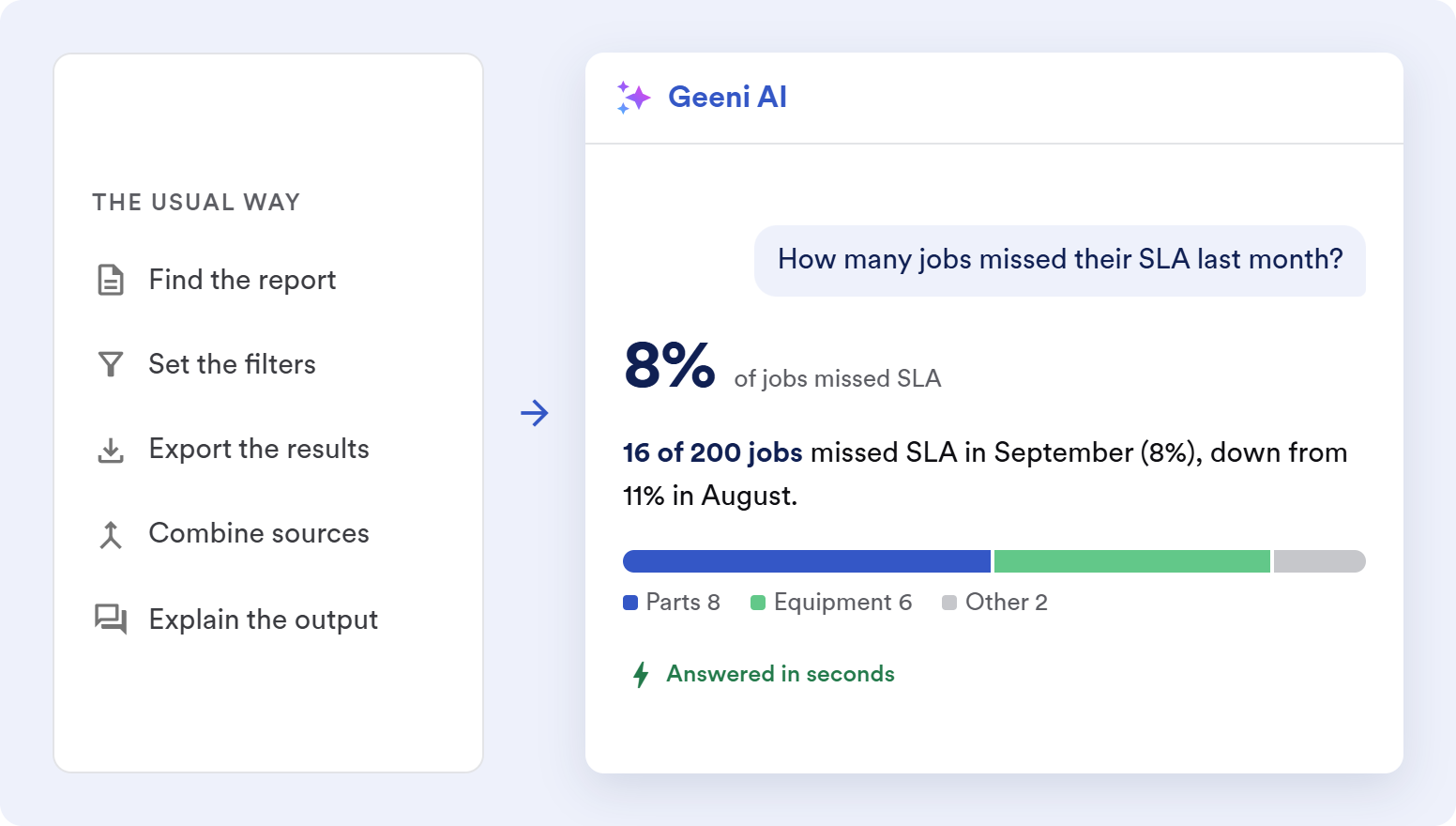
A simple question can easily turn into a reporting exercise. Getting an answer the usual way can mean:
- Finding the correct report
- Setting the right filters
- Exporting the results
- Combining information from different places
- Interpreting the output and explaining it to someone else
With the AI Operations Agent, users start with the question they need answering and the agent finds the relevant information for them, so decisions aren't held up waiting for someone to pull the figures together.
Rely less on a few expert users
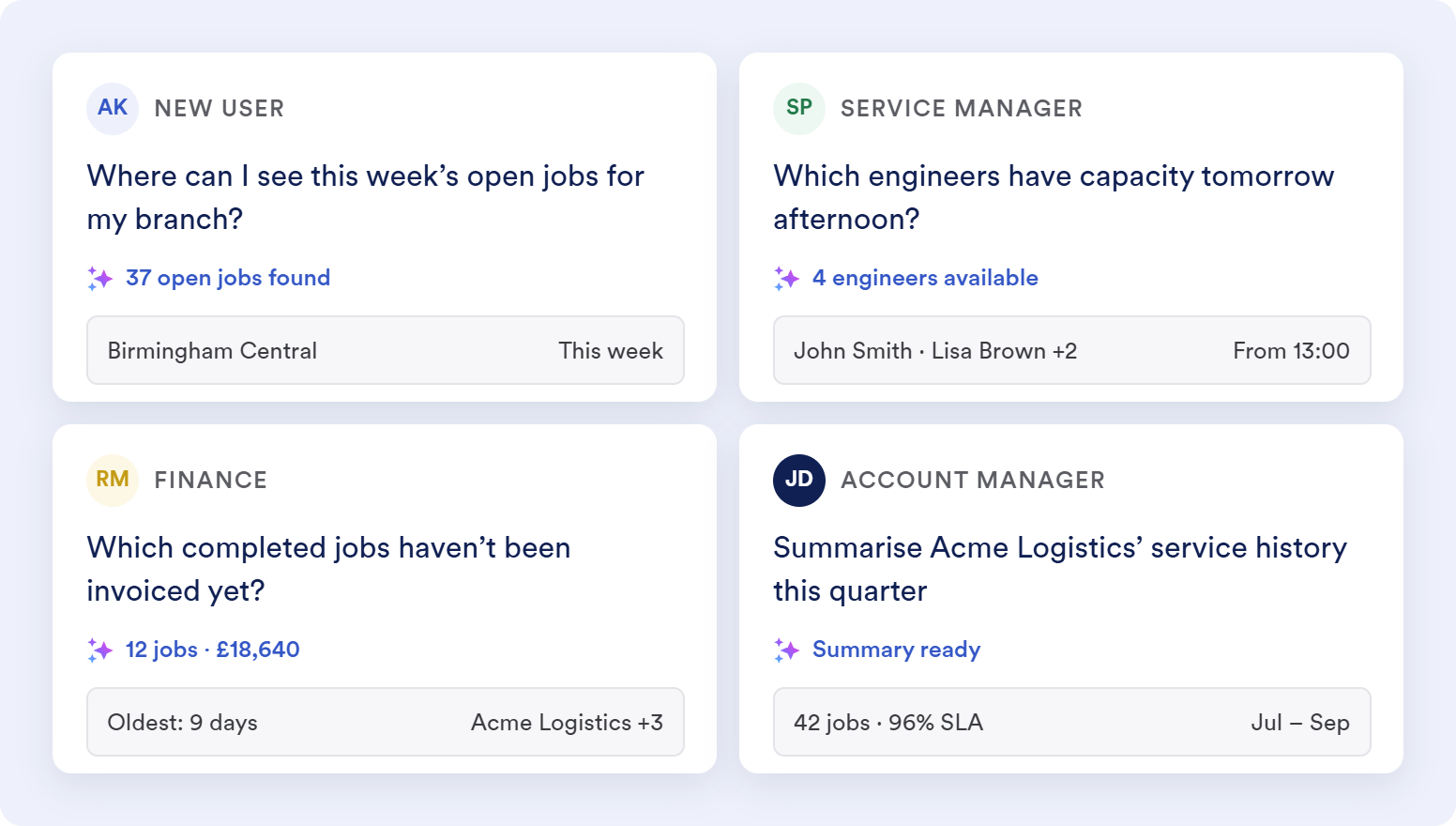
In many businesses, routine questions end up as requests to planners, administrators or analysts who already have plenty on their plate. The AI Operations Agent makes that operational knowledge easier to reach without everyone needing to become a reporting expert. This is particularly useful for:
- Newer or less experienced Service Geeni users who don't yet know where everything is
- Operations and service managers who would otherwise wait on a report or export
- Finance and back-office teams looking into invoicing or contract activity
- Account and contract managers preparing for customer conversations
Spot risks and blockers sooner
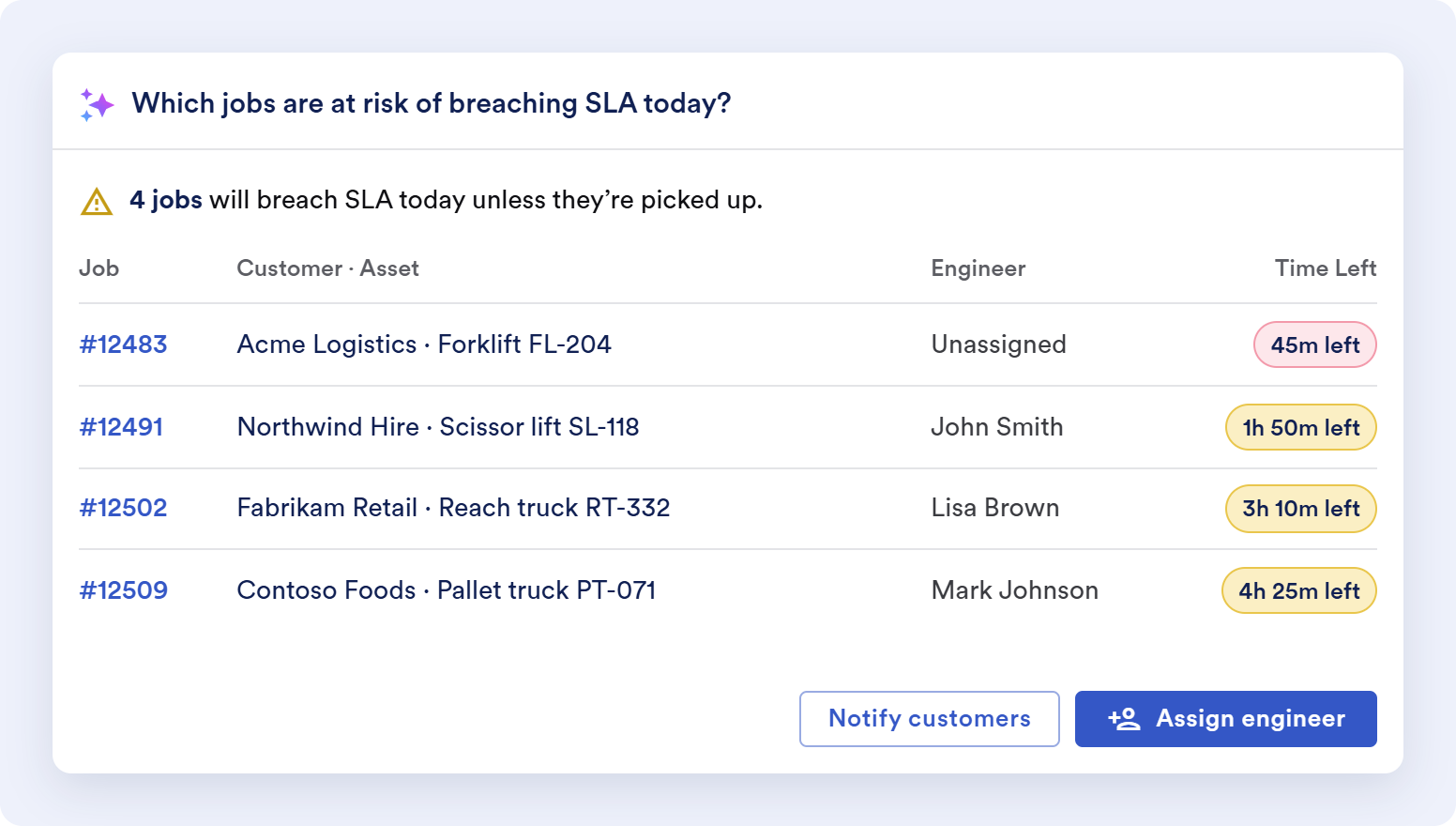
Operational questions often come up because something has changed. When the answer takes days to piece together, the chance to step in may already have gone. The AI Operations Agent helps shorten the time between noticing a problem and deciding what to do about it. Managers can ask questions such as:
- Which jobs are at risk of breaching SLA today?
- Why are completed jobs not being invoiced?
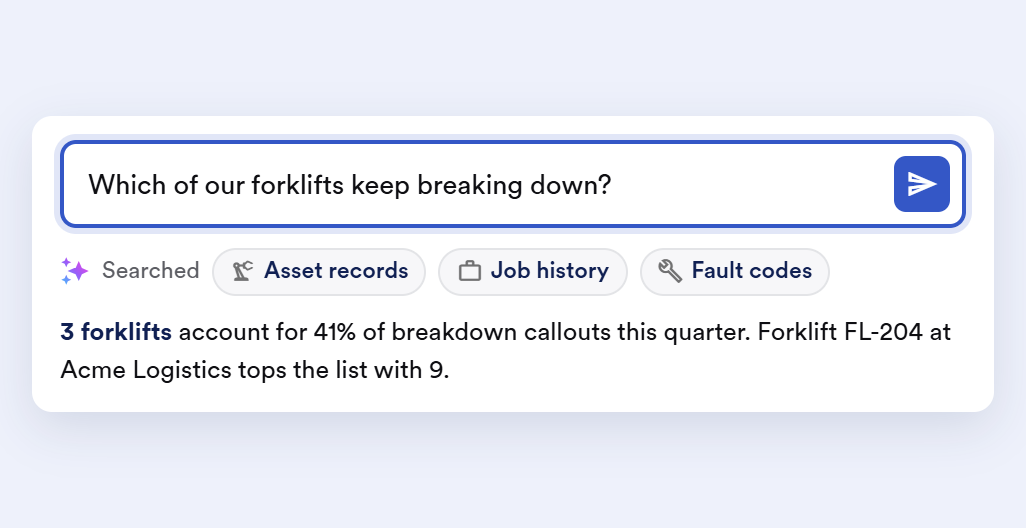
- Which assets have had the most repeat callouts?
- Where is workload becoming unbalanced?
- Which customers have experienced the most downtime?
Understand what sits behind the numbers
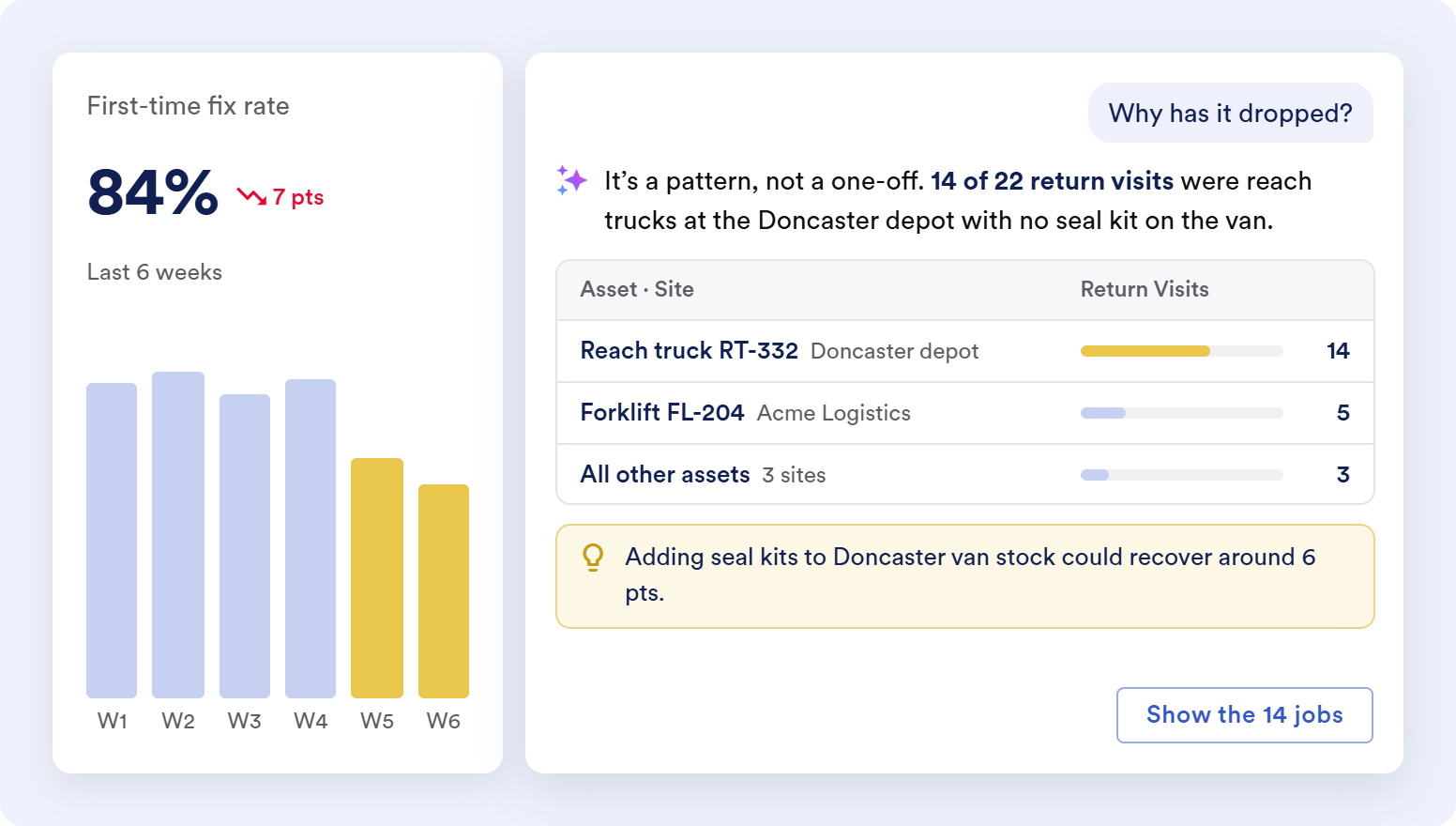
A figure can tell you that performance has changed, but it won't always tell you why. The first answer to a question may reveal:
- A pattern
- An exception
- A bottleneck
- A group of affected records
- An unexpected change
Follow-up questions then let users dig into the related jobs, assets, customers or engineers behind it. This makes it easier to tell whether you're looking at a one-off issue or a pattern that's affecting the wider operation.
Keep data access under control
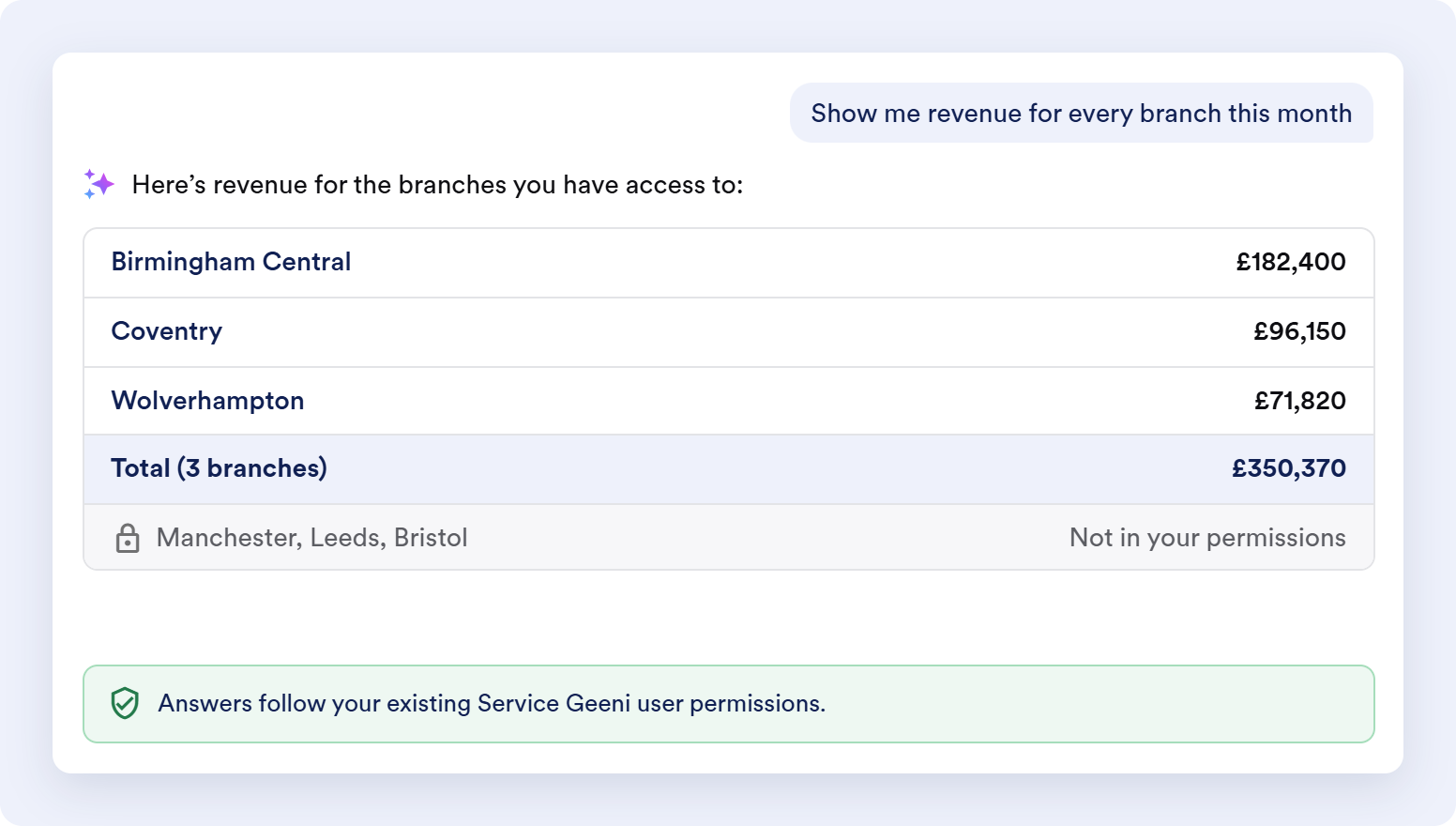
The AI Operations Agent follows your existing Service Geeni user permissions, which means:
- Each user only receives answers based on data they're already permitted to see
- Introducing the agent doesn't open up information that was previously restricted
How Your Team Gets From Question to Answer
Answers questions in plain English
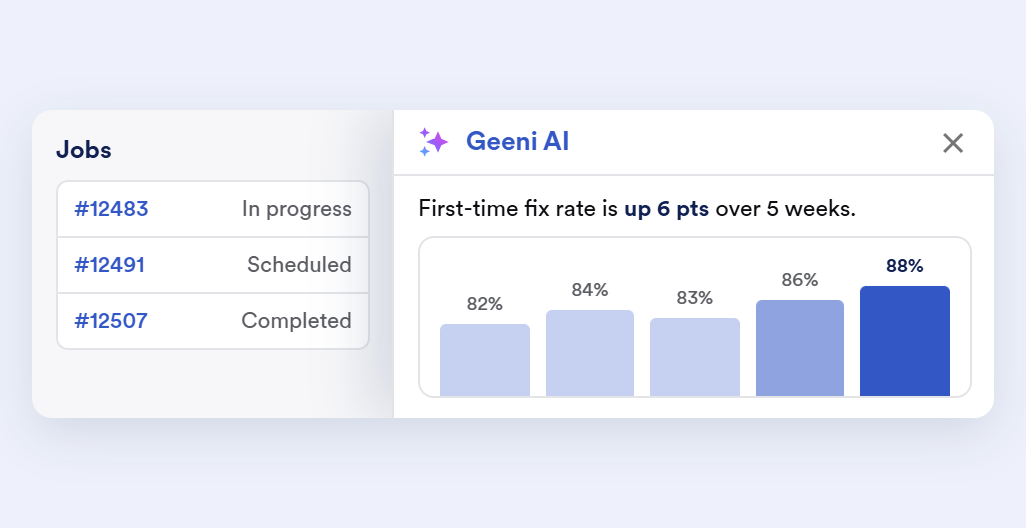
Returns clear, visual answers inside your workflow
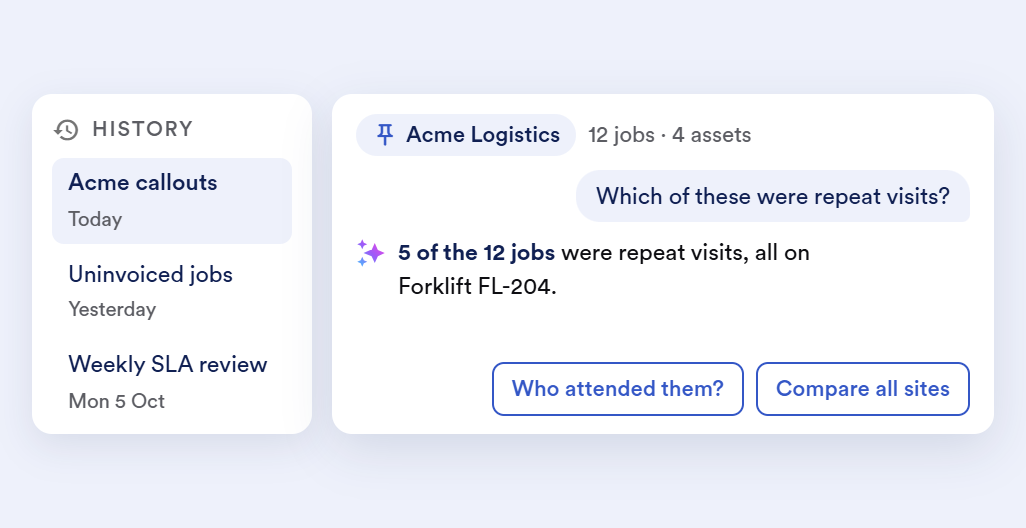
Keeps the conversation in context
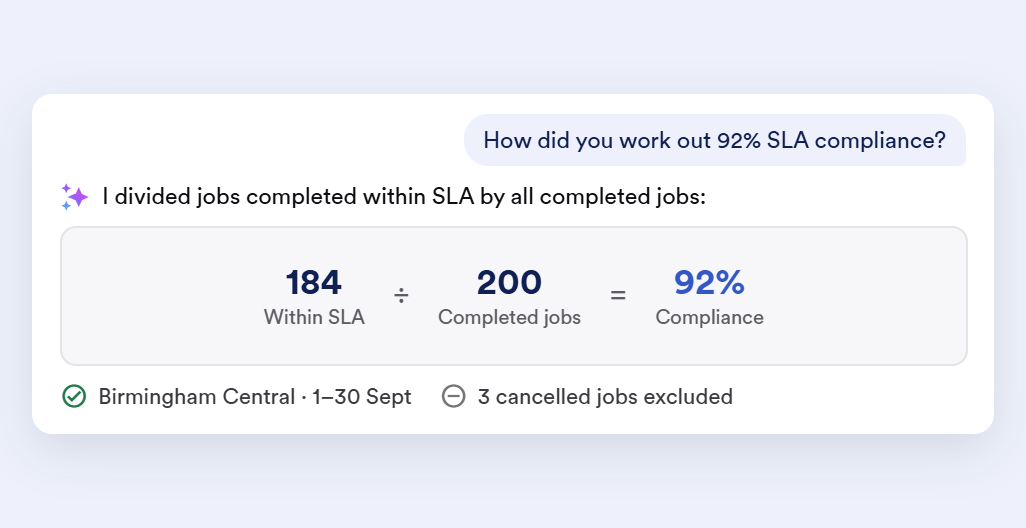
Explains how results were calculated

What Else Does Service Geeni Do?


Helping Service Teams Deliver More, Every Day
Customer service is enhanced, bottlenecks are eliminated. We have grown and are comfortably handling more business, without the need to employ more staff. Sales have increased by 86%.

We can feed a lot of information back into the client’s system which we never did before. For example, the photos the engineers take. Previously, any photos tended to just sit on engineer’s phones. Now, we actually use them.


AI Built Into the Platform You Already Use
Generic AI tools aren't connected to your service records, and standalone business intelligence tools usually need data preparation or specialist administration before they're useful.
Service Geeni's AI Operations Agent works inside the platform where your jobs, customers and service activity are already managed, drawing on data from modules such as Asset Management. Existing access controls still decide what each person can see.
It sits alongside Reporting & Business Intelligence, so you can use the agent for one-off questions and turn anything worth monitoring into a formal KPI or report.
Paired with the AI Scheduling Agent, which recommends schedule improvements, it gives your team a clearer view of the wider operation. Book a demo to see it in action.
You have questions We have answers
What data can the AI Operations Agent use?
It draws on connected information held in Service Geeni, including jobs, customers, sites, invoices and equipment. Answers are based on the data recorded in your system and the access rights of the person asking.
Can users see information outside their permissions?
No. The AI Operations Agent follows your existing Service Geeni user permissions, so each person only receives answers based on data they're already allowed to access.
Does the AI Operations Agent replace Reporting & Business Intelligence?
No. Reporting & Business Intelligence handles defined KPIs, repeatable dashboards and scheduled reports. The AI Operations Agent is for exploring ad hoc questions conversationally, and works alongside your structured reporting.
What kind of questions can I ask?
You can ask operational questions in plain English, such as which jobs are at risk of breaching SLA, which assets generate repeat callouts or what's stopping completed work from being invoiced.
Can I check how an answer was worked out?
Yes. You can ask the agent how a result was calculated, so your team can check the reasoning before acting on it.
We’re With You Every Step of the Way
Switching service software can feel daunting, but you’re not on your own. With a dedicated implementation team, customer success representatives, and a knowledge base full of how-to guides and videos, you’ll always have the support you need.



Book Your Demo Today

Talk to Us