

How to Stop PPM Visits Slipping Over Christmas


Why do PPM backlogs build up over Christmas?
PPM backlogs build up over Christmas because the number of engineer days available falls sharply while the number of visits falling due doesn't change. The 2026 calendar makes this especially tight. Christmas Day is on Friday 25 December, and because Boxing Day falls on a Saturday, Monday 28 December is the substitute bank holiday. New Year's Day follows on Friday 1 January 2027. According to the GOV.UK bank holiday list, that leaves England, Wales and Northern Ireland with just three working days between the two bank holiday weekends, from Tuesday 29 to Thursday 31 December. Scotland loses one more, as 2 January falls on a Saturday and Monday 4 January 2027 becomes a substitute bank holiday. Several pressures then land on that short window at once:
- Engineer leave clusters into the same fortnight. Leave requests tend to land around the bank holidays, so even the working days in late December often run at reduced strength.
- Reactive work competes for the same engineers. For Material Handling providers in particular, customer warehouses and distribution centres are often at their busiest in the weeks before Christmas, and breakdown calls on busy fleets pull engineers away from planned visits.
- Some customer sites close. If a site shuts for the holidays, any visit due during the closure has to happen before or after it.
- Other customers want work done during their shutdown. A production shutdown is a convenient time to have equipment serviced, which adds demand at exactly the point capacity is lowest. None of this is a surprise, which is why it's worth dealing with in November rather than discovering the gaps in the second week of January.
Which PPM visits can't slip?
Statutory thorough examinations can't slip. Contractual PPM visits usually have more room to move, but only with the customer's agreement.
Statutory thorough examinations
LOLER sets maximum intervals between thorough examinations, and those intervals don't stretch for public holidays. Unless a competent person has drawn up an examination scheme with different intervals, HSE's thorough examination guidance says examinations should take place every:
- 6 months for lifting equipment and any associated accessories used to lift people
- 6 months for all lifting accessories
- 12 months for all other lifting equipment HSE's lifting equipment FAQs list fork-lift trucks, mobile elevating work platforms and hoists among the equipment LOLER covers. For forklifts, the requirement applies to the lifting chains, forks, mast and cylinders, and any fork attachments. That puts statutory dates at the centre of PPM planning for Material Handling, lifting and access and some ground support equipment providers. Under LOLER, the duty to make sure equipment is examined usually sits with your customer as the employer using it, but in practice they're relying on you to deliver it. If a 12-month examination falls due on 29 December and no engineer is available, the customer is left with equipment that is past its examination date, and that reflects on you as their service provider.
Contractual PPM visits
Contract PPM visits that aren't tied to a statutory interval usually have some flexibility. Moving one still needs the customer's agreement, and that agreement should be recorded against the job, especially where the contract includes SLAs or a fixed number of visits per year. Some contracts also tie servicing to running hours or manufacturer intervals, so check the contract's service schedule and scope of work before assuming a visit can wait until January.
How do you bring PPM visits forward without creating new problems?
Start from one list of everything due over the holiday window, move statutory work first, and confirm every change with the customer in writing.
- Pull every visit due between mid-December and mid-January. Group them by site and region so one engineer can cover several assets in a single trip.
- Bring statutory examinations forward first. Book them into late November and the first half of December, while you still have most of your engineers available.
- Move contract visits next, where the customer agrees. Some customers will be happy to bring a visit forward, while others may prefer a firm January date.
- Tell customers in writing which visits are moving and why. Include the original due date, the new date and the reason, so there's a clear record if anyone queries it later.
Watch the knock-on effect on next year's dates
Each LOLER examination report records the date of the examination and the date the next one is due. The statutory intervals are maximums measured from the last examination, so there's no early window that keeps the original anniversary. An examination brought forward by three weeks means the next one falls due three weeks earlier too, unless a competent person has set different intervals under an examination scheme. For one customer that's a minor change. Across a large customer base, it shifts a block of next year's work and can affect contracts that specify a set number of visits per year. Move each examination only as far forward as capacity requires, and check the visit count before you confirm the new date.
How should you plan January recovery?
Decide before the break which visits get priority when engineers return, and protect enough capacity to clear the maintenance backlog left over from December.
- Start with anything overdue or close to its statutory limit. These go into the first available slots, ahead of routine contract work.
- Ring-fence capacity in the first two weeks of January. Expect some reactive demand as customer sites restart, and keep it from swallowing the PPM recovery.
- Allow for Scotland returning a day later. With Monday 4 January 2027 a bank holiday there, Scottish teams and customer sites lose a day that the rest of the UK has.
- Report back to customers. Confirm what was completed before the break and what is booked for January. If the same visits slip every December, it may be worth looking again at how your PPM programme is set up. Tracking planning and scheduling KPIs such as schedule compliance and backlog age through the year will also show where the pressure points are.
Where does field service management software help?
Field service management software helps by putting upcoming due dates and engineer availability in the same place, so you can see a clash weeks before it happens. In practice, that means:
- Filtering every statutory and contract visit due in a date range across your whole customer base, and seeing which engineers are available on those days
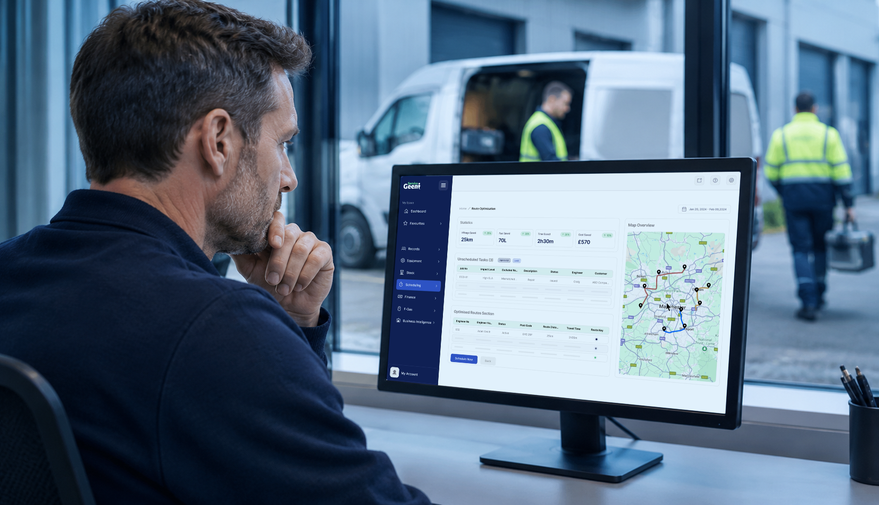
- Moving large numbers of visits at once, with each change recorded against the job Service Geeni's AI Scheduling Agent takes engineer skills, job location and SLA deadlines into account when building schedules, and planners can review and adjust the proposed schedule before it goes live. Alongside thorough examination tracking, that gives service managers a clearer view of what has to be done before the break and what can safely wait until January.
Download Full PDF
Read More…



Book Your Demo Today